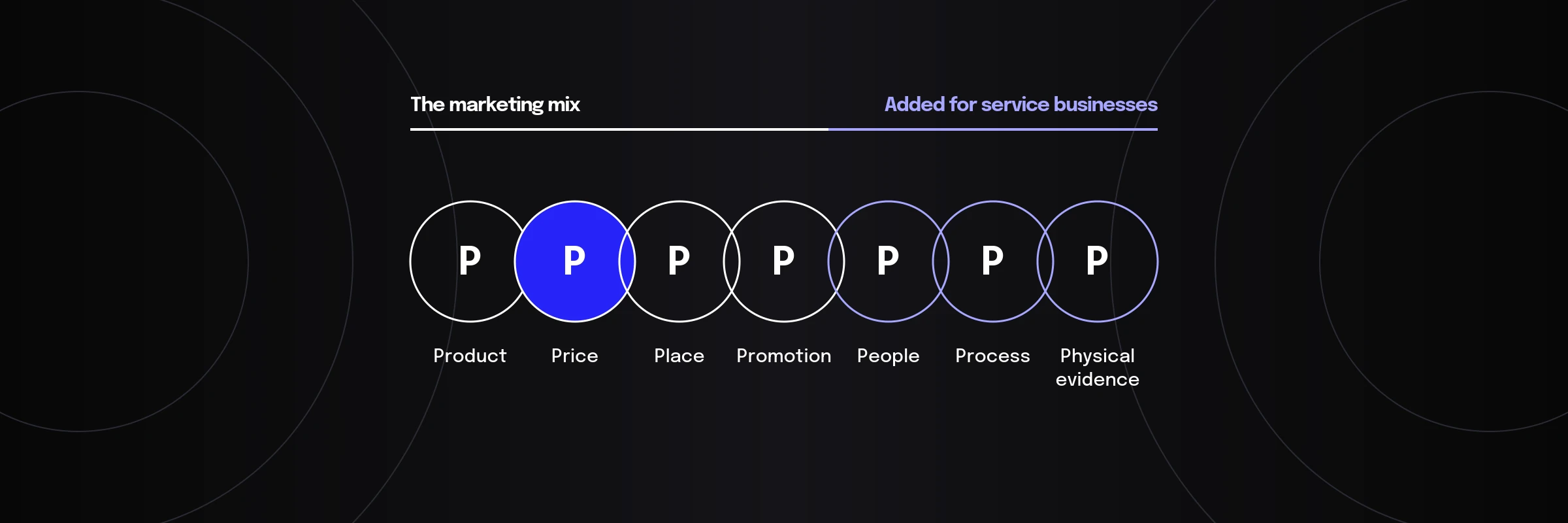
Most businesses turning over $3M to $30M don’t have a marketing problem. They have a growth question that marketing hasn’t been asked to answer yet. The 7Ps of marketing are a useful way to answer it, because they cover every part of how a business wins and keeps customers, not just the advertising. We work as business strategists who use marketing as the tool, so this guide treats each P as a profit lever: what it means for an owner at your stage, how to pull it, and where to read more.

At a glance
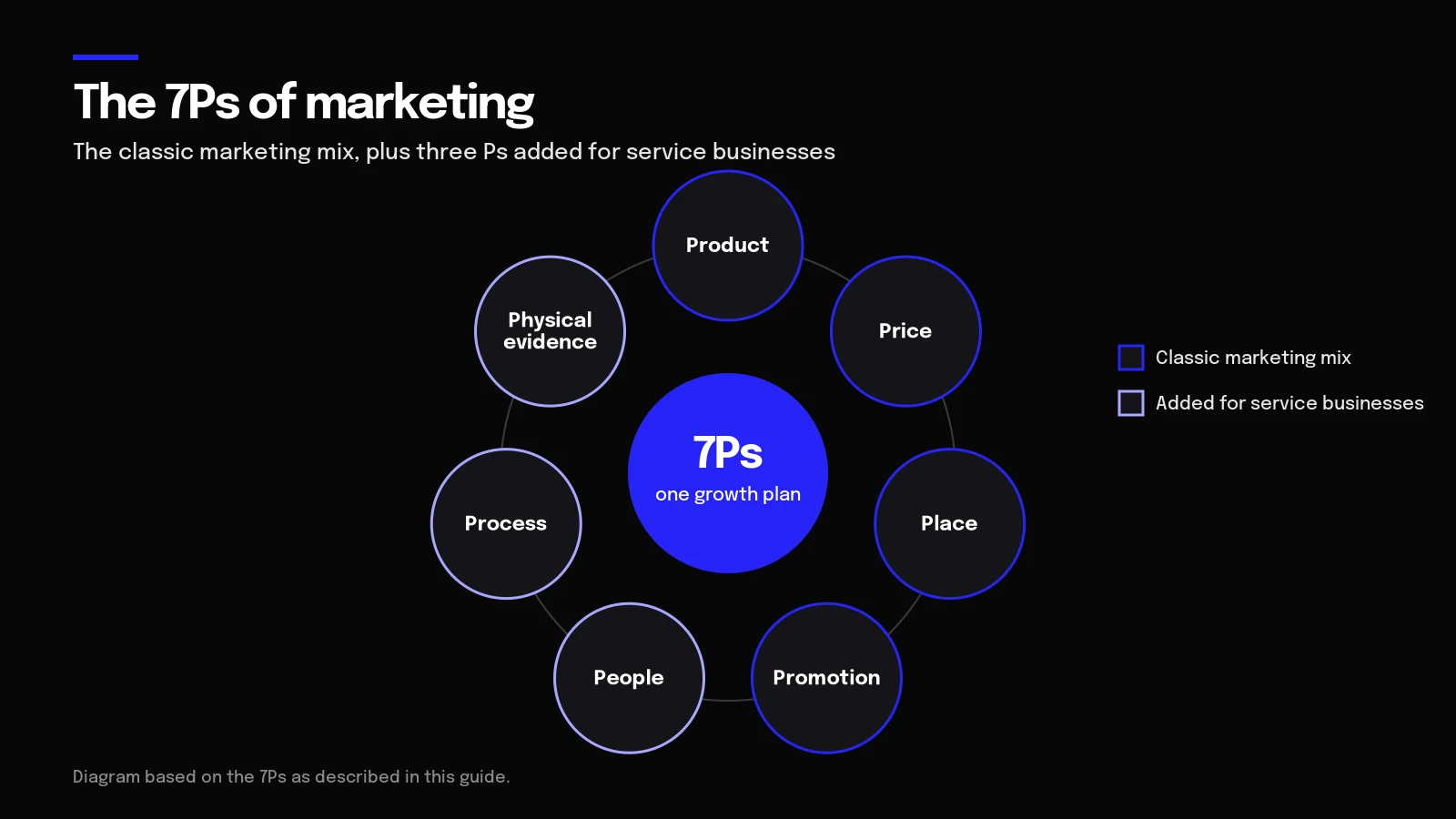
The 7Ps are product, price, place, promotion, people, process and physical evidence. The first four are the classic marketing mix, and the last three were added for service businesses, which describes most of the businesses we work with.
- The biggest gains: rarely from promotion alone.
- Where they come from: knowing which products carry the profit, pricing with confidence, keeping the customers you win, then scaling the channels that bring in more of them.
- The fastest test: every campaign is a live read on how the market responds to your offer, so marketing is also the quickest way to test each P.
In this guide:
Product

Product is what you sell and which parts of it make money. At your size, the useful question is less about adding lines and more about knowing which ones carry the business. Work out contribution margin by product or job type, and it usually shows that a handful of lines carry most of the profit. That list becomes the marketing brief.
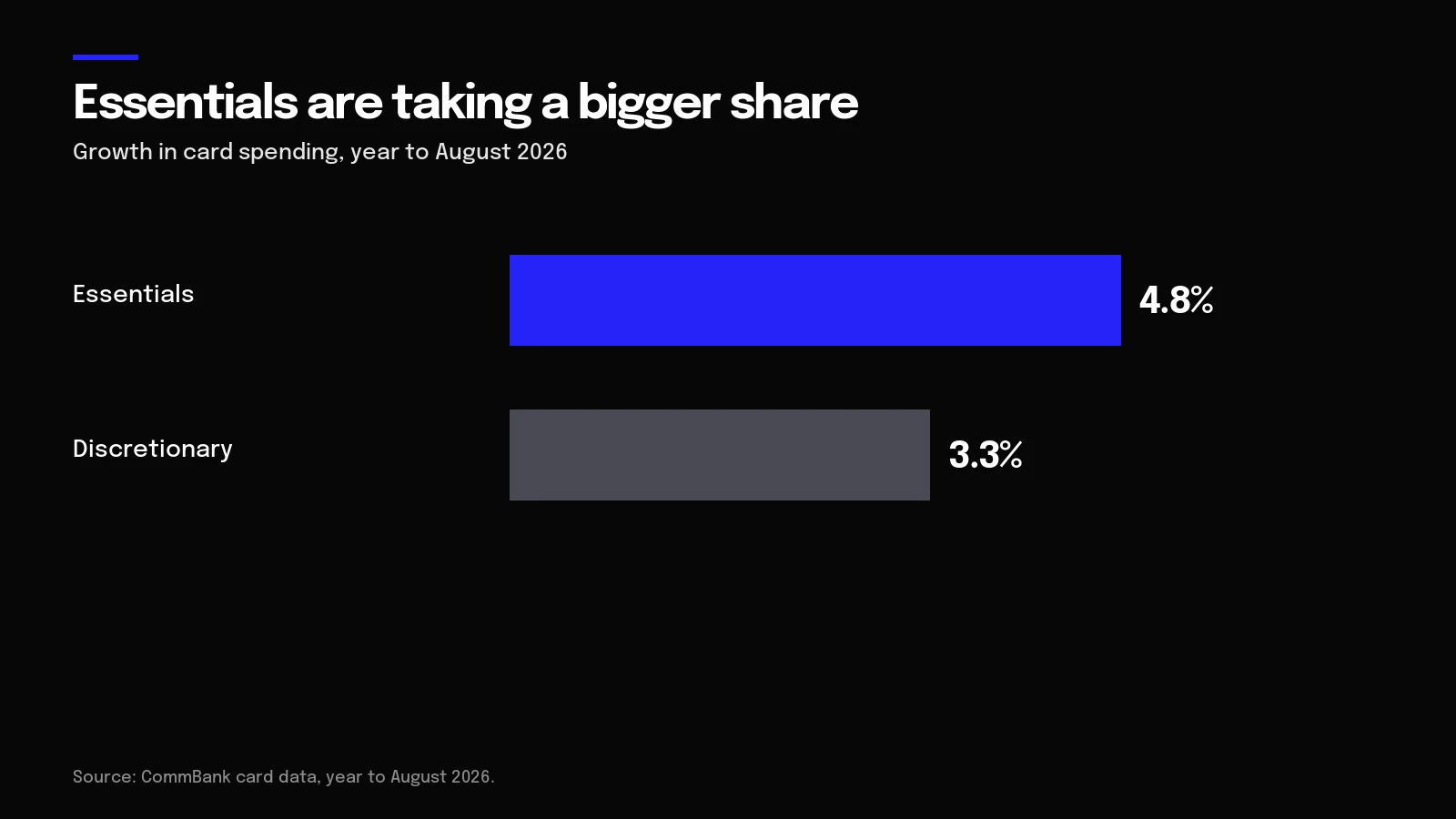
The second question is position. Essentials are taking a bigger share of household budgets, and CommBank card data showed spending on essentials up 4.8 percent over the year to August, against 3.3 percent for discretionary spending.
The rest flows to clear value leaders and genuine specialists, not the middle. Our analysis of where the money goes when households cut back traces five directions spending is moving.
Your move: Decide whether your product is clearly good value or clearly better, then make that obvious in every ad and landing page.
Price

Price usually moves profit more than volume does, and it is the P most businesses pull last. Your marketing data can show how much room you have before you commit, and our guide to using your marketing to test a higher price covers the method in detail.
Price usually moves profit more than volume does, and it is the P most businesses pull last.
Start with your close rate. A very high close rate usually means almost nobody found your price a reason to hesitate. Then run two simple tests:
- Test the price: lift prices on new quotes by a modest step, such as 10 percent, and track close rate and gross profit per job for a quarter. If the close rate barely moves, step again.
- Test market depth: lift ad spend in steps toward double over three or four weeks and change nothing else. If leads rise roughly in line and cost per lead holds, there are far more buyers than you’ve been reaching, which gives you plenty of room to grow at the higher price.
Then give customers a way to stay. When budgets tighten, most customers trade down rather than leave, provided there’s somewhere to go. Households protect what matters to them: APRA reports that 45.8 percent of Australians held hospital cover at 30 June 2026. A good, better, best range turns that behaviour into retention: a squeezed customer steps down a tier, stays in your routine and is the easiest one to win back up when things improve.
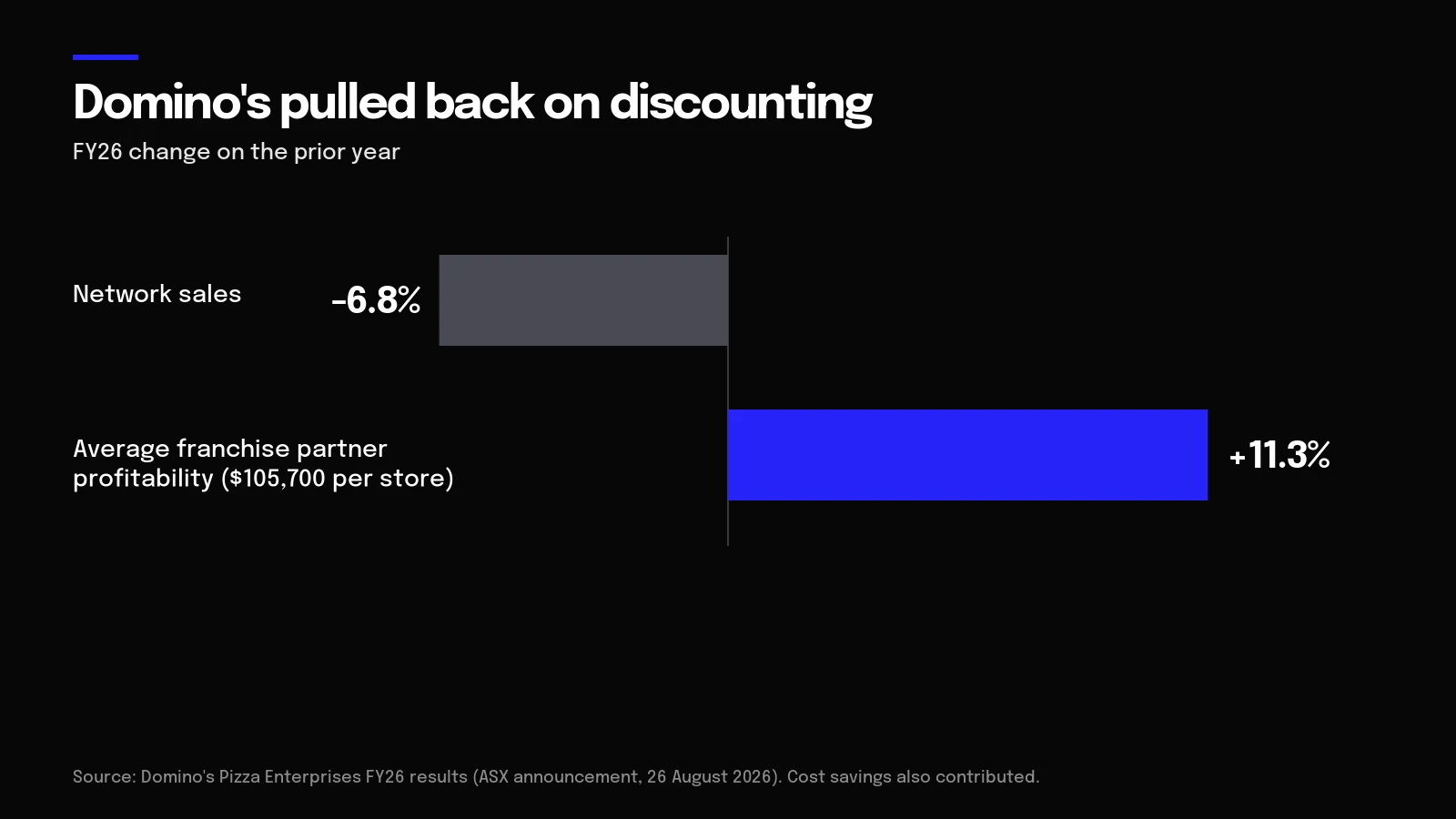
Finally, make discounting a decision rather than a habit. In its FY26 results, Domino’s reduced its reliance on broad discounting. Network sales fell 6.8 percent, yet average franchise partner profitability rose 11.3 percent to $105,700 per store. Cost savings helped too, but it shows pulling back can work. Our breakdown of what Domino’s results show about discounting covers the WA trial behind it.
The same thinking applies to the peaks. As an illustrative example, 20 percent off a product with a 40 percent margin halves the profit on every sale, and some of November’s sales are borrowed from December: the ABS recorded household spending up 1.0 percent in November 2025, then falling in December.
Your move: Keep headline discounts for hero and clearance lines, and use bundles, value-adds and early access everywhere else. Our guide to Black Friday offers that protect your margin shows how.
Place

Place is where and how customers buy from you: your own website, your stores, marketplaces and the regions you serve. The growth opportunity is to use each one for the job it does best.
- Marketplaces for discovery: Australians spent $82.6 billion online in 2025, and pure marketplaces took 23 percent of it, according to Australia Post. Marketplaces bring traffic, but the customer belongs to the platform. Our piece on why your own customer list matters more as marketplaces grow makes the case for treating your own list as the place where margin lives.
- Your own list for margin: at Super Retail Group, active club members accounted for between 80 and 92 percent of sales across its brands in FY26.
- Stores as a marketing channel: product in hand persuades and the website often captures the sale later. Comparing online sales from postcodes near each store with similar areas that have no store gives a useful read, though treat the result as a signal rather than proof. Our guide to growing online sales alongside physical stores shows how to measure that.
One rule for any big move: Check the plan still works at 50 and 75 percent of your assumptions.
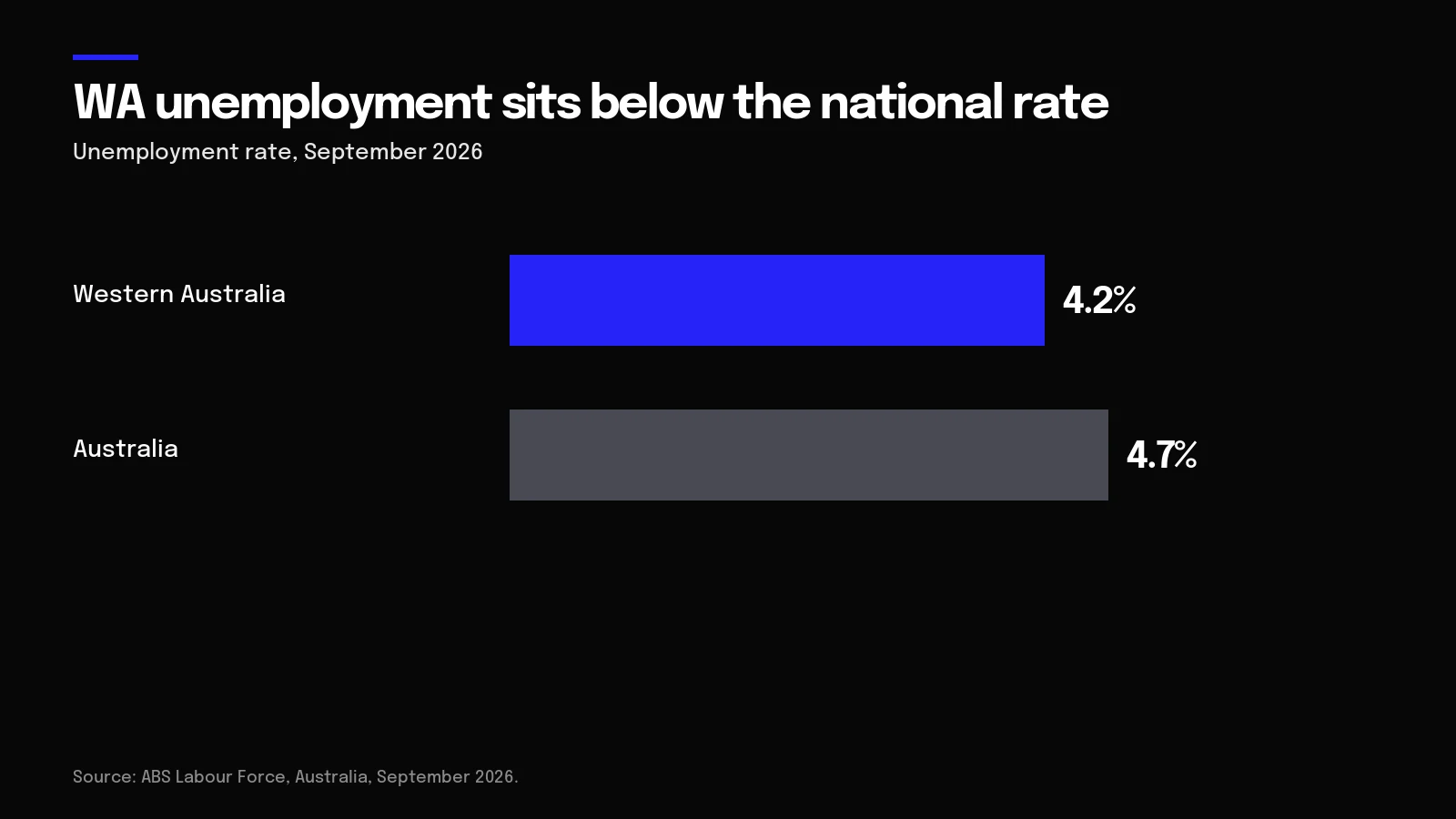
Geography is part of place as well. ABS Labour Force figures put WA unemployment at 4.2 percent in September against 4.7 percent nationally, and Australia Post found WA online spending grew 18 percent in 2025. That is a good reason to test a modest skew toward WA buyers against your own sales data.
Promotion

Promotion is how you reach people, and it works best once the other Ps are settled, because each channel does a different job.
- SEO: search captures existing demand and compounds over time, as our complete guide to SEO explains.
- Google Ads: paid search reaches people at the moment they look. Our Google Ads guide covers the setup, including customer lifecycle goals that value a genuinely new customer above a returning one. Importing qualified leads and sale values and using value-based bidding points Google at buyers like your best customers rather than the cheapest enquiries.
- Meta: creates demand rather than capturing it. Its Andromeda retrieval system leans on creative to match ads to people, so the strongest accounts pair broad targeting with a varied library of angles, offers and proof. Stacking interests still has a place in tight local service areas, but in most accounts the creative now does the targeting, as our Meta Ads guide shows.
In most accounts, the creative now does the targeting.
Timing is the other half of promotion. CommBank iQ found Australians spent $23.8 billion over the 2025 Black Friday fortnight. At Christmas, the Retail Safari and Swinburne University survey finds families aged 35 to 54 have the largest gift budgets yet are the most likely to spend less, and 71 percent of shoppers plan to do most of their gift shopping before December. Our read on where shoppers are still spending this Christmas breaks this down by group, so you can put the budget where the buyers are.
When the diary fills: Keep the ads running at the new price rather than pausing them, because the campaigns keep testing demand.
People

People means two groups: the customers you serve and the team who serve them. On the customer side, the averages in the news hide the households you actually sell to. The Reserve Bank lifted the cash rate to 4.60 percent in September, but RBA analysis of household cash flow shows a rate rise lands very differently: mortgage holders feel it most while outright owners are often slightly ahead. Our look at which customers are still spending after the 2026 rate rises explains why families with a mortgage tend to delay rather than cancel, which makes staying in touch the smart move.
It also pays to know where your customers earn their income. By our calculation from ABS data, health care, education and public administration now drive only about a third of employment growth, down from about 88 percent, while construction added about 55,000 jobs in the year to August 2026. Our piece on how shifts in Australian job growth are changing customer demand has the full picture, and it is a good reason to test offers aimed at trades and business customers.
On the team side, the people who answer the phone, quote the job and deliver the work decide your close rate and your repeat rate.
The team that keeps customers is as much a growth lever as the ads that find them.
Process

Process is how a customer moves from first enquiry to repeat purchase, and how you measure it. The first process to fix is the scoreboard. Marketing is often scored on numbers that can improve while the business earns less, which is why measuring marketing by profit instead of revenue is the first thing we check:
- Returning customers get counted as ad wins.
- Platforms report conversions by their own attribution rules.
- The ads that scale best often sell the lowest-margin lines.
Illustrative example: An online store turning over about $1.06M spent around $29 in advertising behind every order, on an average order of about $62. Close to half of every sale went back into acquisition, and nothing in the revenue figure showed it.
Score every sale on contribution margin instead, and set a break-even acquisition cost: the most you can pay to win a customer before they stop making money. ROAS still has a job as a day-to-day campaign signal. It just shouldn’t be the scoreboard.
Then decide whether this year is for growth or profit:
- Growth year: paying close to break-even on the first order can be right if customers reliably come back.
- Profit year: the target sits well below first-order margin.
Our business growth consulting is built around that decision, because every channel choice gets easier once it’s made.
The second process is follow-up. In January 2026, ABS data showed goods spending fell 0.3 percent while services rose 1.0 percent. Households stop buying things and start booking them. Our guide to keeping festive customers coming back in January explains why January is decided in November: capture permission to stay in touch at every sale, with a welcome series and second-visit offer ready before the rush.
Physical evidence

Physical evidence is everything a customer can see before and after they buy: reviews, case studies, your website and landing pages, your premises, packaging and the invoice itself. For a service business it is how a buyer judges something they can’t touch yet. The practical move is to put your strongest proof where the buying decision happens:
- Landing pages: lead with real reviews and specific results.
- Ad creative: use customer stories.
- Premises: make sure the store, clinic or office looks like the business your pricing says you are.
Why it pays: Strong proof lifts close rates across every other P, which is why it is often the cheapest growth lever on this list.
The 7Ps at a glance
| P | How to use it | The result |
|---|---|---|
| Product | Rank lines by contribution margin and pick a clear position | A marketing brief built on the lines that pay |
| Price | Test about 10 percent on new quotes, add good, better, best tiers and target discounts | More profit per sale from the customers you already win |
| Place | Use marketplaces for discovery, measure what stores add online and test a WA skew | Margin kept on channels you own |
| Promotion | Give SEO, Google Ads and Meta each a job and a profit target | Spend that finds buyers, not just clicks |
| People | Segment customers by how the economy is affecting them and back the team that keeps them | More customers kept and more repeat sales |
| Process | Score sales on contribution margin and set up follow-up before the peaks | A scoreboard that tracks profit and repeat sales |
| Physical evidence | Put reviews and real results where the buying decision happens | Higher close rates across every other P |
The good news: None of these needs a new channel. They change what you ask your existing marketing to do.
Where to start
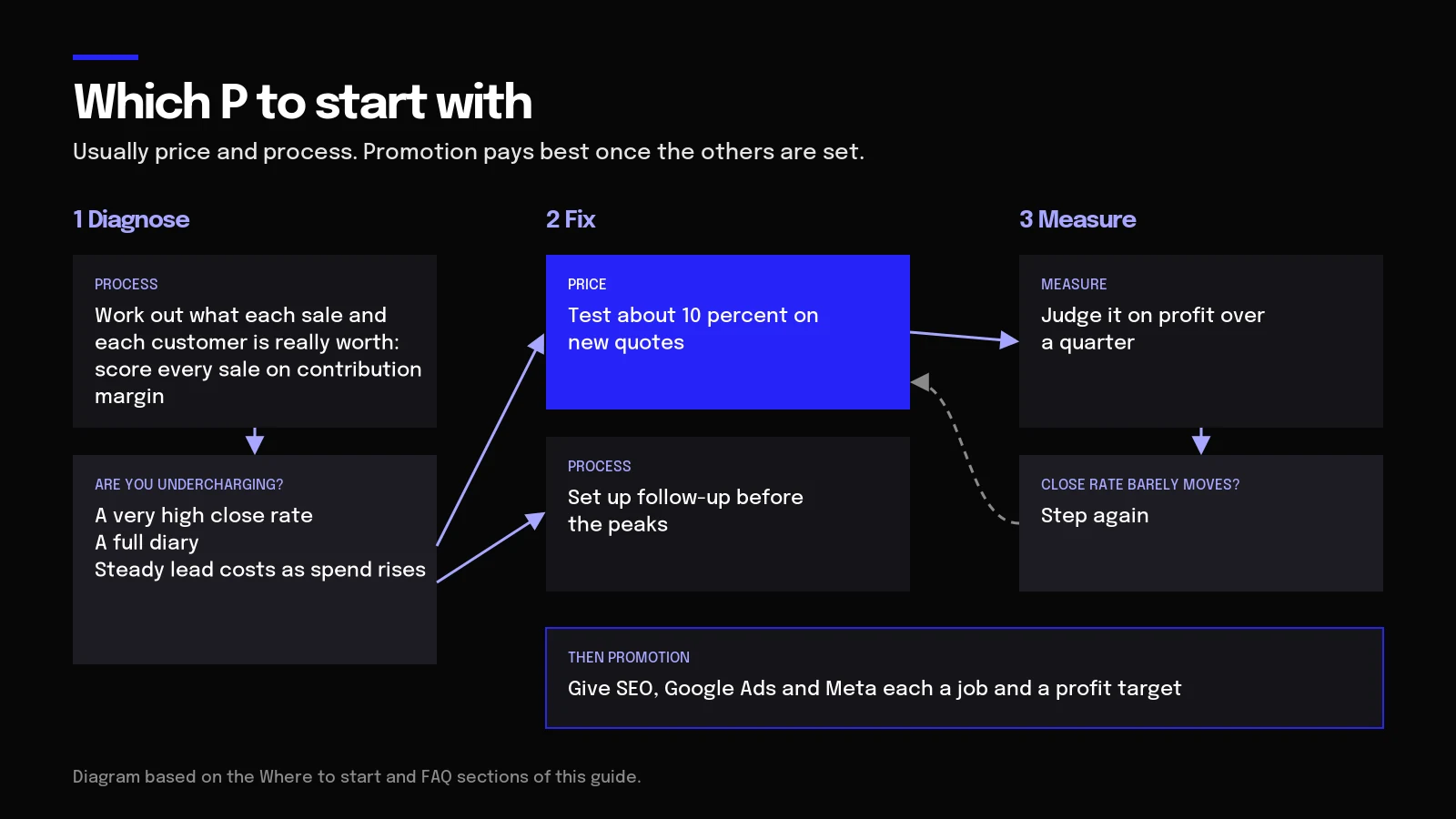
Start by working out what each sale and each customer is really worth, then point your marketing at the growth that pays. Pulling the 7Ps into one plan, with each channel given a job and a profit target, is what our marketing strategy service does.
If you’d like a second opinion on where your next stage of growth will come from, contact us or email hello@thedigitalmarketingconsultants.com.au. We’ll tell you straight which levers we’d pull first.