The shape of the summer spending season is becoming clearer each year. It now starts earlier, with Black Friday and Cyber Monday in late November, and the patterns that follow are worth understanding before you plan.
At a glance
After the festive peak, spending shifts sharply, and discount-led customers drift away unless you stay in touch. This article explains what happens from November to January, who comes back and why January marketing should be planned before the rush. Handy for retailers and service businesses preparing for summer.
January is decided in November, which is why post-peak planning features in so much of our consulting work.
What happens to spending after the peak
November pulls spending forward
The ABS Monthly Household Spending Indicator shows how strong the November sales have become. In November 2025, household spending rose 1.0% in a single month. Spending on clothing and footwear rose 2.4%, and spending on furnishings and household equipment rose 2.5%.
December then fell back. In the ABS January 2026 release, clothing and footwear spending fell 2.6% in December, and furnishings and household equipment fell 2.0%. Many households had simply bought earlier.
The week after Christmas is still big
The days after Christmas remain an important part of the season. Before last Christmas, the Australian Retailers Association and Roy Morgan forecast around $1.6 billion in Boxing Day spending, up 4.3%, and $3.832 billion over the full week from 25 to 31 December, up 4.4%. They expected that week to be supported by strong demand for value, post-Christmas discounts and the redemption of Christmas gift cards.
January shifts from goods to services
In January 2026, total household spending rose 0.3%. But the mix changed. Spending on goods fell 0.3%, while spending on services rose 1.0%. Health spending rose 1.7%, and miscellaneous goods and services rose 2.5%. Spending on furnishings and household equipment fell 0.7%, and spending at hotels, cafes and restaurants fell 0.6%.
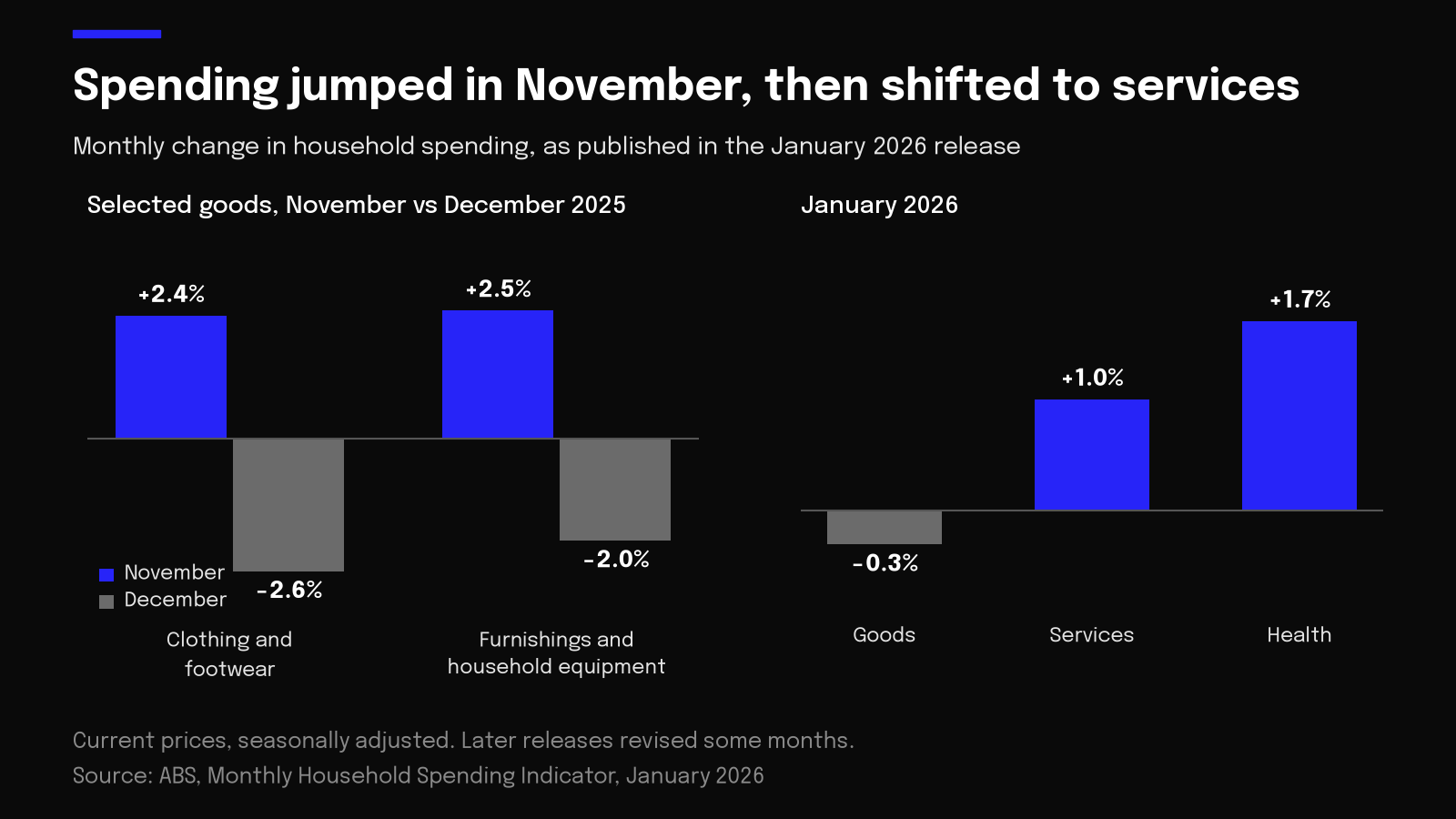
In plain terms, January is when many households stop buying things and start booking things: appointments, check-ups, services and the routines that pause over the holidays.
The chain reaction
The sales bring in new customers
Black Friday, Christmas and Boxing Day bring in people who may never have bought from you before. Australia Post’s eCommerce Report 2026 found shoppers are spreading their spending across an average of 16 brands a year, so many of those first purchases are a test.
Discount-led customers drift away
A customer who came for a discount will often wait for the next one. If nothing brings them back, the relationship ends with a single sale. The cost of winning them, through ads and discounts, is never fully recovered.
January budgets tighten
After the festive season, many households turn to bills, school costs and the start of the year. Interest rates are higher than a year ago, and essentials are taking a bigger share of household budgets. That makes January customers more selective.
The businesses that stayed in touch win
When customers do spend in January, they tend to choose businesses they already know. A friendly, useful message at the right time is far more likely to bring someone back than an ad seen by someone who has never heard of you.
Who comes back in January
Customers who need a service
Health, beauty, fitness, wellbeing and home services all benefit from the January shift towards services. The January rise in health and services spending suggests many people get back to their routines and appointments once the holidays are over.
Gift recipients
Gift card recipients and people who received a product as a gift are ready-made new customers. Retail Safari’s 2026 Christmas survey found gift cards have slipped down the list of planned gifts, now ranked eighth at 38%, but they remain a popular choice and every one redeemed is a chance to win a new regular.
Customers who bought in the sales
Someone who bought a product in November may need accessories, servicing, refills or advice. That’s a natural reason to get back in touch.
Customers in different regions
Summer holiday patterns vary from place to place, depending on where locals travel and where visitors come. Look at your own sales from last January and plan around your local pattern.
In the US, the pattern is similar
In the United States, Adobe has noted that after Cyber Week, discounts come down from their peaks. Businesses there face the same challenge: turning a short burst of discount-driven buying into longer relationships.
Planning now for January
The most important point is timing. The time to plan your January marketing isn’t January. It’s now, before the rush, so every new customer you win in November and December is already on a path back to you.
Our guide to smarter Black Friday offers shows how early access builds your list before the rush, our piece on why your own customer list matters more than ever explains why those relationships are worth protecting, and our guide to measuring marketing by profit shows how to judge the season.
What to do now
- Make sure every sale over the festive season captures contact details and permission to stay in touch, in store and online.
- Plan a simple welcome series for new customers: a thank you, a helpful tip, and an invitation to come back in January.
- Prepare a January offer that rewards a second visit or purchase rather than another discount, such as a bonus service, a loyalty reward or priority booking.
- If you sell gift cards, plan how you’ll welcome people who redeem them and make it easy for them to book or buy again.
- For service businesses, open January bookings early and remind customers before the holidays so they can secure their preferred times.
- For retailers, plan follow-up messages for sales customers about accessories, care, servicing or related products.
- Schedule your January emails and social posts in advance, so they go out even if you’re busy or away.
- After January, review how many festive customers came back, and use that to plan next year’s season.
Retention belongs in your marketing strategy from the start of the season, not as an afterthought in January.
If you would like help keeping this season’s new customers coming back, contact us or email hello@thedigitalmarketingconsultants.com.au.