Most businesses that ask how to generate leads already have some marketing running. What they usually want is something steadier: a reliable flow of the right people putting their hand up, and a clear path from that first contact to paid work. Getting there has less to do with finding a clever new channel than with getting a few connected things right.
It helps to think of lead generation as a system with three parts. People who need what you sell have to find you, they need a good reason to get in touch, and someone has to follow up while their interest is still warm. A business can invest heavily in the first part and still struggle if the other two are left to chance, so this guide treats all three together around one question: what does each lead go on to become?
We begin with what a lead is and how your customers buy, then work through the main channels, the offer and page that turn attention into leads, and the follow-up and measurement that turn leads into revenue. It is written for owners and managers who want a clear picture before they commit time and budget.
At a glance
- What counts as a lead: Someone who has shown real interest and given you a way to reply. Quality matters more than volume.
- How your customers buy: The right tactics depend on whether people search for what you do or need to discover it first.
- Tactics compared: Search, social, referrals and email each suit a different stage of the buying decision.
- Search: SEO, your Google Business Profile and Google Ads reach people who are already looking.
- Social media: Meta and other platforms create demand, so the offer and qualification carry more weight.
- Referrals and your own list: Past customers and partners are often the most trusted source of new leads.
- The offer and the page: A clear offer and a focused page decide how many visitors become leads.
- Follow-up: Fast, consistent follow-up often decides whether a lead becomes work.
- Measurement: Tracking leads through to sales shows which channels are really working.
- Common mistakes: Judge on quality, focus on a few channels and give follow-up a clear owner.
1. What Counts as a Lead
A lead is a person or business that has shown genuine interest in what you offer and given you a way to continue the conversation. That might be a completed form, a phone call, a booking request or a message through your website. The common thread is that they have taken a step towards you, which is what separates a lead from someone who simply saw an ad or visited a page.
Not every lead is equally valuable, and this is where many lead generation efforts quietly lose their way. One campaign can produce plenty of form fills that rarely turn into work, while another produces fewer leads that close far more often. Counted on volume alone, the first looks better on paper even though the second is doing more for the business.
That is why it pays to define a good lead before choosing any tactics. Think about the customers you most want more of: the type of work, the budget, the area you serve and the signs that someone is ready to buy. With that picture in place, every later decision about channels, offers and forms has something to be measured against.
2. Start With How Your Customers Buy
Once you know who a good lead is, the next question is how those people find a business like yours. Some services are searched for at the moment of need: when a hot water system fails, people go straight to Google and start comparing options. Other products are rarely searched for until something prompts the idea, so the business has to reach people before they are actively looking.
This distinction between capturing demand and creating it shapes almost everything that follows. Where demand already exists, the job is to be visible and convincing when people search. Where it does not, the job is to reach the right audience with a relevant message and a reason to act now. Most businesses need some of both, in very different proportions.
It also helps to step back and look at the wider marketing mix before investing in more leads. Price, product, the customer experience and the way you deliver the work all affect how easily a lead turns into a sale, and our guide to the 7Ps of marketing works through each of them. Lead generation sits inside that bigger picture, which is why a clear marketing strategy usually comes before the choice of channels.
3. Lead Generation Tactics Compared
| Tactic | Best suited to | What it needs to work |
|---|---|---|
| SEO and local search | People already looking for what you do | Useful pages, an active Google Business Profile, patience |
| Google Ads | Capturing ready demand quickly | Focused keywords, a clear landing page, steady budget |
| Meta and other social ads | Creating demand before people search | Strong creative, a clear offer, lead qualification |
| Referrals and partners | High trust and often higher value work | A good customer experience and a reason to refer |
| Email to your own list | Bringing past leads and customers back | Consent, useful content, regular sending |
The table is a starting point rather than a ranking, because the best mix depends on how your customers buy and what each lead is worth to you. A business with strong search demand will usually lean on SEO and Google Ads, while one selling something people do not yet know they need will lean more on social media. Referrals and email sit underneath both, since they draw on relationships you have already built.
Most of the useful lead generation ideas we see fall into one of these groups. The sections that follow take each one in turn, starting with search, because for many service businesses it is where the most ready buyers are.
4. How to Generate Leads From Search
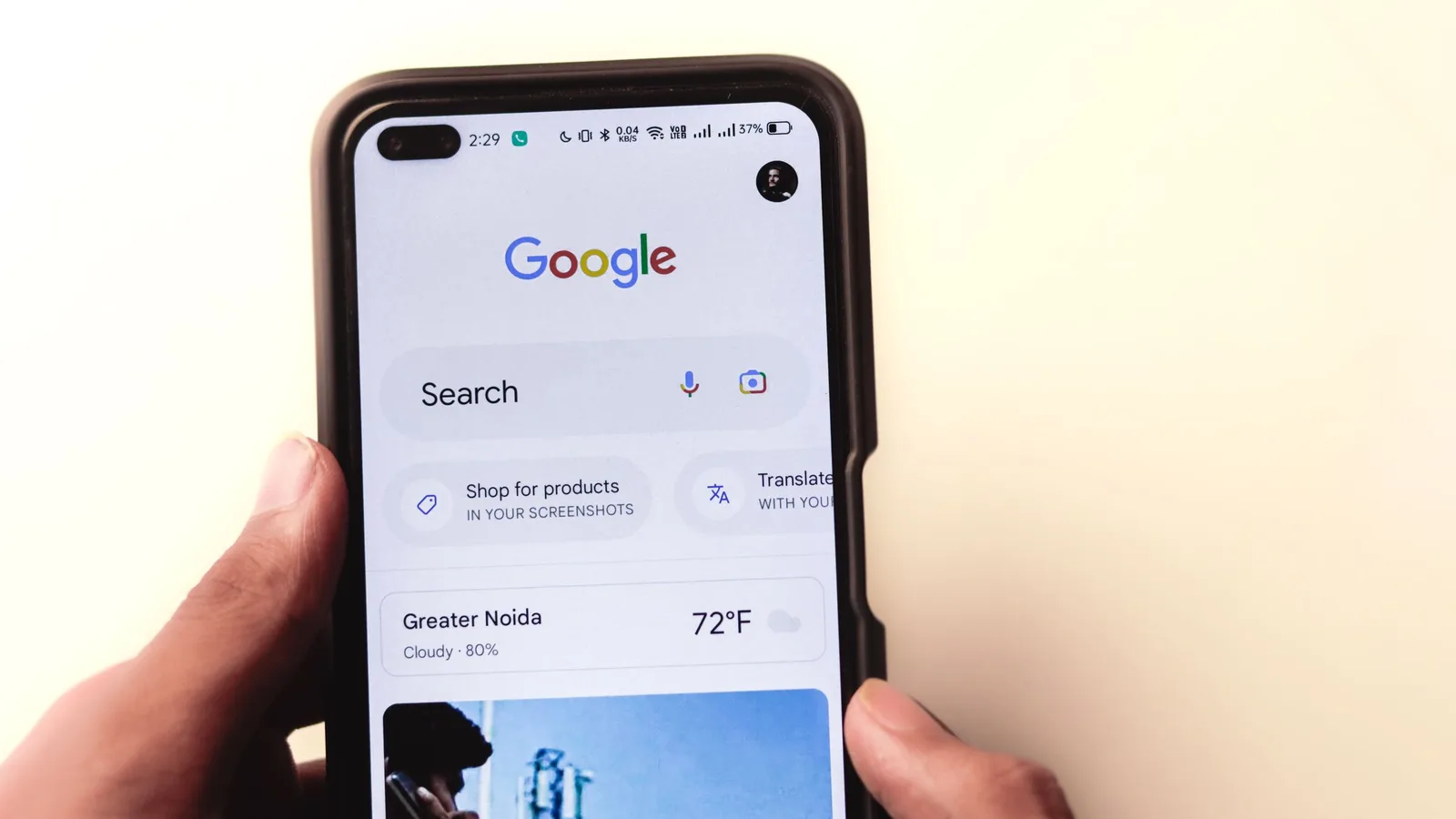
Search is valuable for lead generation because the person has already told you what they want. Someone typing a service and a suburb into Google is usually close to a decision, so the work is to appear where they are looking and give them a clear reason to choose you.
Organic search builds that visibility over time. Pages that answer real questions, explain your services clearly and show genuine experience tend to perform better, which reflects Google’s guidance on helpful, people-first content. Our SEO guide explains how this works in detail, from search intent to technical foundations, so we will not repeat it here.
For businesses that serve a local area, the map results often matter as much as the website. Google says local results are based mainly on relevance, distance and prominence, and that complete, accurate business information and reviews help a profile show for relevant searches. Keeping your Google Business Profile active and accurate is one of the most practical local SEO steps a business can take.
Paid search fills the gap while organic visibility grows. Google Ads lets you appear for chosen keywords from the day a campaign starts, and you pay when someone clicks. The trade-off is that leads stop when the budget stops, so many businesses use paid search for immediate demand and SEO for long-term presence. Our Google Ads guide covers campaign types, bidding and budgets.
5. Social Media: Reaching People Before They Search
Social platforms work differently because most people are not looking for a supplier when they open them. That makes social media more about creating demand than capturing it, so the message has to earn attention first and then make a clear, relevant offer.
Meta’s advertising system is well suited to this because it can find people likely to respond, provided it receives good signals about which leads are valuable. Meta’s lead ads offer instant forms that people complete without leaving the app, and Meta describes a higher intent form type that adds a review step for businesses that want more deliberate leads. The choice between an easy form and a more considered one is really a choice between volume and quality, so it should follow from the definition of a good lead you set earlier.
Because social leads are often earlier in their decision, qualification and follow-up carry more weight than they do with search. Our Meta Ads guide explains how the platform works, and our comparison of lead generation and ecommerce campaigns shows how a lead focused account should be set up differently from an online store.
6. Referrals, Partners and the Customers You Already Have
Paid channels tend to get the most attention, yet some of the best leads come from people who already know your work. A referral arrives with trust attached, because someone the prospect respects has vouched for you, and that usually makes the decision quicker.
Referrals grow when the experience is worth talking about and asking is part of the routine. A simple request at the end of a successful job and a thank you to the person who referred both help. Partners who serve the same customers, such as complementary trades or professional advisers, are often the most consistent source, because they meet your ideal customers in the normal course of their own work.
Your own list of past customers and earlier leads is the other asset here. People who asked for a quote last year, or who bought once and have not returned, already know who you are. Email is a cost-effective way to stay in touch, but it comes with clear rules in Australia. The ACMA explains that under the Spam Act 2003 you need consent before sending marketing messages, must identify your business as the sender and must make it easy to unsubscribe. Businesses covered by the Privacy Act also need to handle the personal information they collect in line with the Australian Privacy Principles.
7. Turning Attention Into Leads: The Offer and the Page
All of these channels send people somewhere, and what they find there decides whether they become a lead. When owners ask how to get more leads, the answer is often a better offer and a clearer page for the traffic they already have, rather than more traffic.
The offer is the reason someone gets in touch now rather than later. For many service businesses it is simply a free quote, which works when the value is clear and the next step feels easy. Where the decision is bigger or the buyer is earlier in their thinking, an offer such as a short assessment, a guide or an indicative price range can lower the barrier without asking for a commitment they are not ready to make.
The page then has one job: help the right visitor take that step. A focused landing page usually explains the problem you solve, shows proof such as reviews and examples of past work, answers the obvious questions and makes the form or phone number easy to find. Each extra form field reduces volume a little but can improve quality, so the form should ask only for what you need to follow up well. Our article on landing pages that convert goes into the detail.
The rest of your website matters too, because many people check a business more than once before reaching out, and clear service pages and genuine reviews give them the confidence to act.
8. Follow-Up: Where Leads Are Won or Lost
A lead is only an opportunity, and how quickly and consistently you respond often decides whether it turns into work. This is one of the most overlooked lead generation tips, partly because follow-up sits between marketing and sales and can easily belong to no one.
Speed matters because interest fades and people often contact more than one business. In research published in the Harvard Business Review in 2011, the authors studied 1.25 million sales leads across 42 US companies and found that firms that tried to contact a lead within an hour were nearly seven times as likely to qualify it as those that waited even an hour longer. The study is older and based on US companies, so the exact figure should be read with care, but the principle of replying while interest is fresh is a sensible one to build around.
Good follow-up is also about process: who responds to each type of lead, how quickly, and how many times they try before closing it off. A simple system that records every lead and its outcome, even a well kept spreadsheet at first, makes this far easier and creates the data you need for the next step.

9. Measuring What Your Leads Become
This brings us back to the question set at the start. Leads are only useful if you can see which ones turn into customers, which means tracking each lead from its source through to the sale.
The foundation is accurate conversion tracking, so that every form, call and booking is recorded against the campaign, keyword or page that produced it. From there, platforms can learn from outcomes rather than form fills. Google’s enhanced conversions for leads, for example, uses information from your website forms to help measure sales that happen later, offline, and feed them back into your campaigns.
Once sales data is connected, the most useful measures are cost per qualified lead, close rate and the value of the work won from each channel. Cost per lead alone can be misleading, because a cheaper lead that rarely closes may cost more in the end than an expensive one that usually does. Our guide to measuring marketing by profit explains how to take this one step further and judge channels on the profit they bring in.
10. Common Lead Generation Mistakes
With the system in view, the most common mistakes are easier to spot, and each one has a straightforward fix.
The first is judging success on lead volume alone. It is an understandable habit, since volume is the easiest number to see, but it can push budget towards the channels that produce the least valuable work. Reviewing quality alongside quantity keeps decisions grounded.
The second is spreading effort across too many lead generation tactics at once. Each channel needs time, budget and attention, and a business that tries everything at a low level often learns very little. Starting with the one or two channels that best match how your customers buy, then adding more once they perform, tends to produce clearer results.
The third is treating follow-up as someone else’s job. A shared view of every lead, with an agreed response time and owner, closes that gap and often lifts results without any extra spend.
FAQs
What is the fastest way to generate leads?
For most businesses, paid search is the quickest way to start, because Google Ads can show your business to people searching for your services as soon as a campaign is live. Paid social can also produce leads quickly, although those people are often earlier in their decision. Both work best with a clear offer, a focused landing page and fast follow-up.
How much should I spend on lead generation?
It depends on what a customer is worth to your business and how many leads it takes to win one. Working backwards from the value of a typical sale and your close rate gives you a sensible ceiling for what each lead can cost. It is usually wise to start with a modest budget, measure the results and increase spend on the channels that perform.
What are some low cost lead generation ideas?
Asking happy customers for referrals and reviews, keeping your Google Business Profile complete and active, publishing helpful content that answers common questions and staying in touch with past leads by email are all low cost options. They take time rather than budget, and they tend to build on each other.
Conclusion
Learning how to generate leads well comes down to three connected parts: being found by the right people, giving them a good reason to get in touch, and following up while their interest is still warm. Measuring what each lead becomes ties those parts together and shows where the next dollar or hour should go. Whether your focus is SEO, Google Ads or Meta advertising, the businesses that grow steadily are the ones that treat lead generation as a system rather than a single campaign.
For practical help building a steady flow of leads, contact us or email hello@thedigitalmarketingconsultants.com.au.