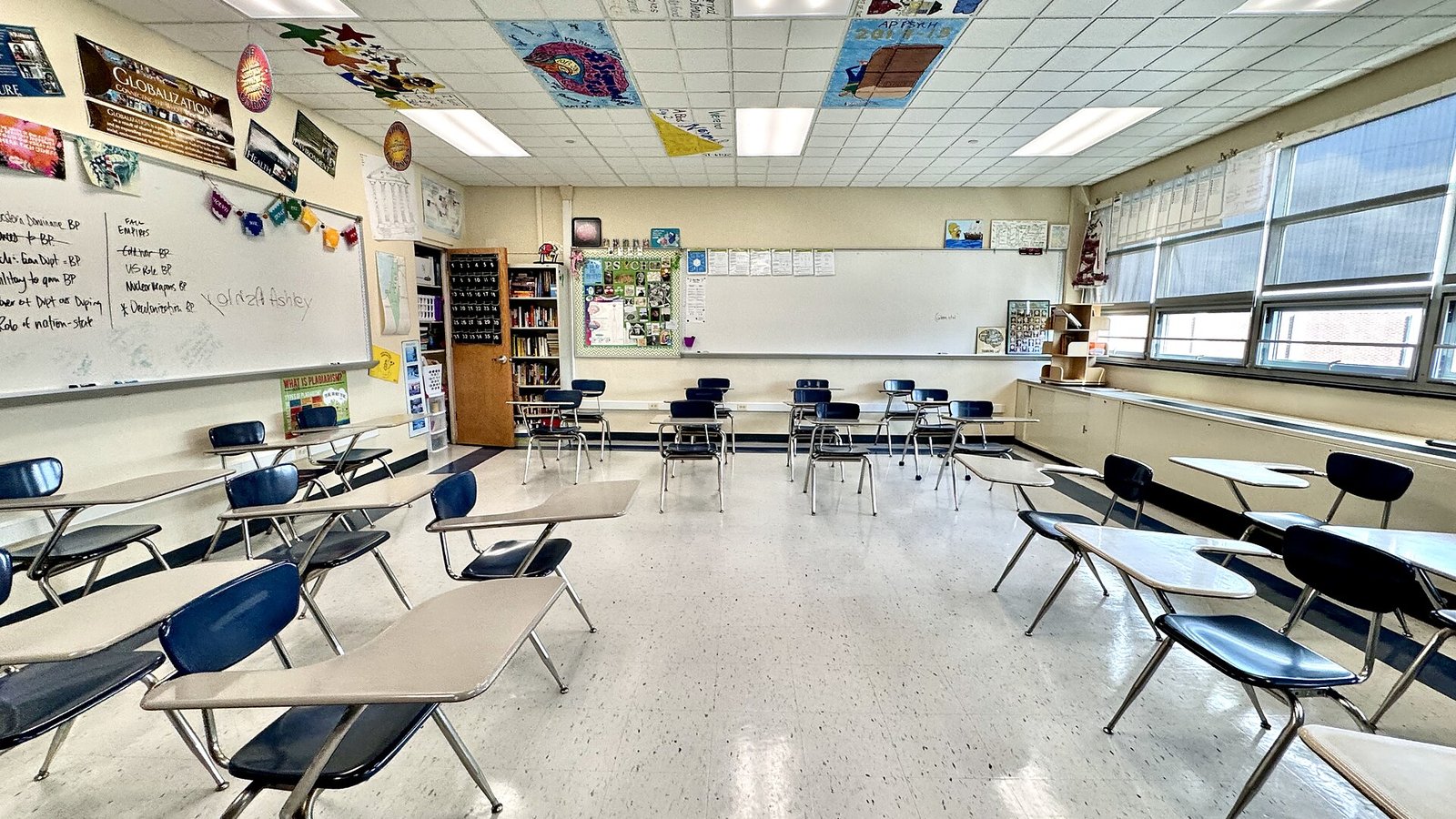
Photo: Harrison Keely, CC BY 4.0, via Wikimedia Commons. Cropped from the original.
AI has arrived in classrooms faster than almost any technology before it. Students use chatbots for homework help, teachers use AI to plan lessons and schools are working out what counts as honest use. For parents, it can be hard to know whether to encourage AI, restrict it or simply understand it better.
Australia has a national framework to guide schools, and education systems in each state and territory are developing their own approaches. Understanding the basics helps families and teachers have better conversations about using AI well.
This guide explains the national framework, how AI is used in schools, the main risks and practical steps for parents and teachers. It is general information, and each school’s own policy should be the first reference. For the wider picture, see our guide to artificial intelligence.
The national framework
The Australian Framework for Generative Artificial Intelligence in Schools was developed by the National AI in Schools Taskforce and released by education ministers in 2023. It sets out principles for using generative AI in ways that benefit students, schools and society, covering teaching and learning, human and social wellbeing, transparency, fairness, accountability, and privacy, security and safety.
The framework was reviewed in 2024, and education ministers endorsed that review in June 2025. It guides rather than dictates, so the way AI is used varies between states, sectors and individual schools. Parents should check their school’s policy for specific rules.
How students use AI
Students commonly use AI to explain difficult concepts, brainstorm ideas, check understanding and get feedback on drafts. Used well, it can act like a patient tutor that answers questions at any hour. Some education departments have introduced tools designed specifically for students, with safety settings suited to schools.
Problems arise when AI replaces learning rather than supporting it. Asking a chatbot to write an essay may produce a result, but the student misses the thinking the task was designed to build. The aim is to use AI to learn more, not to do less.
How teachers use AI
Teachers use AI to plan lessons, create resources, differentiate material for different learners and reduce administrative work. This can free time for teaching and individual support. Many schools are developing guidance on which tools teachers may use and what student information must never be entered.
Professional judgement remains central. AI-generated materials can contain errors or bias, so teachers review and adapt them. Using AI for assessment or reporting decisions needs particular care, consistent with the framework’s emphasis on accountability.
> Key quote: the aim is to use AI to learn more, not to do less.
Risks to watch
Accuracy is a common risk, because AI tools can present incorrect information confidently. Privacy is another, especially when students enter personal details into tools that are not approved by the school. Age limits and terms of service for consumer chatbots also matter, as many are not designed for younger children.
Wellbeing deserves attention too. Some AI companion apps are designed to build emotional attachment, and generated images can be misused for bullying. The eSafety Commissioner provides advice for families on online safety, including AI-related harms.
Academic integrity and detectors
Schools are rethinking assessment so that it values process and understanding, for example through drafts, in-class work and conversations about how students reached their answers. Clear rules about when AI is allowed help students use it honestly.
AI detectors are not reliable enough to prove that work was AI-written. OpenAI withdrew its own detection tool in 2023 because of low accuracy. Fair processes rely on evidence and discussion rather than a detector score, as discussed in AI writing tools.
Tips for parents
Start by learning what your child’s school allows and talking openly about how your child uses AI. Encourage them to use it to explain and check, rather than to produce finished work. Exploring a tool together is often the easiest way to understand it.
Agree on simple rules, such as never sharing personal details, checking important facts against reliable sources and being honest with teachers about AI use. Keep an eye on age limits and the apps your child uses.
Questions to ask your school
Parents can learn a lot by asking a few simple questions. Which AI tools are students allowed to use, and for which tasks? Are any tools provided by the school or education department, and what safety settings do they have? How are teachers adjusting assessments, and how will students know when AI use is permitted?
It is also reasonable to ask how student information is protected when teachers use AI, and how the school handles suspected misuse. Schools are still developing their approaches, so the answers may be evolving, but asking signals that families care about using AI well.
Teachers can support this by explaining AI rules clearly in each subject. A short note on assessment tasks stating whether AI may be used, and how it should be acknowledged, removes much of the uncertainty for students and parents.
Common mistakes
One common mistake is banning AI completely at home, which can leave students unprepared and less likely to talk about their use. Another is allowing unrestricted use without discussing honesty or privacy.
Schools sometimes rely on detectors to judge work, which can lead to unfair accusations. Families may also overlook age limits and data settings on consumer apps.
Where to start
Australia’s national framework encourages schools to use AI in ways that support learning while protecting privacy, fairness and wellbeing. Parents and teachers can help by understanding school policies, encouraging AI as a learning aid rather than a shortcut, and keeping conversations open. For broader guidance on AI, see our guide to AI jobs and skills.